Miami, Florida — What was expected to be a routine ceremonial moment has quickly placed the Miami Dolphins at the center of a controversy far beyond football.
Just days after a major on field achievement, the conversation has shifted away from performance and toward a decision that has divided public opinion.
The organization has officially accepted an invitation to visit the White House, a tradition typically associated with honoring championship success.
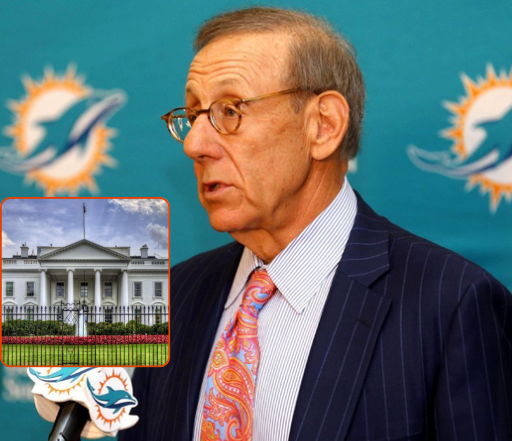
Owner Stephen Ross confirmed the decision, emphasizing that it is intended to recognize the team’s accomplishments.
However, for many observers, the meaning behind the visit has become increasingly complex.
The Dolphins are set to be among the first NFL champions to visit the White House under the current administration of Donald Trump.
That single detail has reshaped how the situation is being perceived.
Across social media, reactions quickly emerged suggesting that accepting the invitation could be interpreted as an indirect political stance.
Many fans expressed disappointment, arguing that the franchise risks compromising the neutral identity it has long represented.
Some critics went further, questioning whether the visit is appropriate given the current social climate.
“This is no longer just a traditional visit. In today’s environment, every decision carries meaning, and many believe this places the Dolphins on one side of a broader conversation.”
At the same time, an equally strong opposing viewpoint has taken shape.
Supporters argue that a White House visit is simply part of completing the championship journey and should not be politicized.
They believe sports and politics should remain separate in this context.
Inside the Dolphins organization, leadership has maintained a consistent message.
The visit is being framed as respect for tradition, not as a political statement.
Players have reportedly been given the freedom to decide individually whether they will attend.
That flexibility reflects the sensitivity of the situation and acknowledges differing perspectives within the locker room.
It also highlights a broader reality across modern professional sports.
The line between tradition and social messaging continues to blur.
For the Dolphins, their success on the field initially defined their story.
Now, a decision off the field is beginning to shape how that story will ultimately be remembered.
To many observers, this is no longer just about a visit.
It is about how a franchise navigates public perception in an increasingly polarized environment.
As the visit approaches, the debate is expected to intensify.
Because in today’s climate, even actions rooted in tradition can carry multiple interpretations.
And every decision may quickly become part of a much larger conversation.