Green Bay, Wisconsin — The NFL world erupted this week after a brief on air comment from a franchise legend unexpectedly ignited a wave of controversy.
What seemed like a routine television moment quickly spiraled into a larger debate, drawing reactions from fans, analysts, and former players across the league.
The situation centered around Aaron Rodgers, whose words were quickly interpreted as criticism toward the modern generation of quarterbacks.
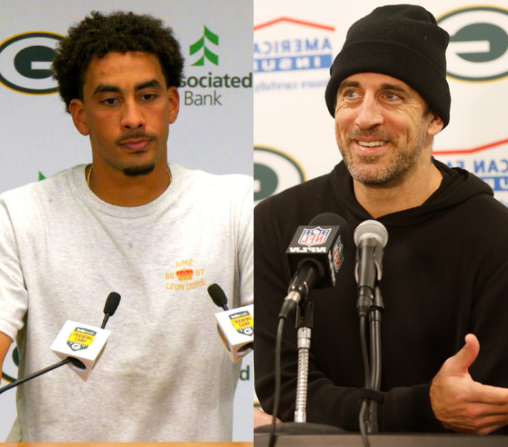
“Sometimes I feel like some of these young quarterbacks still don’t truly understand what leading a franchise really means.”
Though the remark was short and unscripted, it spread rapidly across social media, transforming into a heated and polarizing discussion.
Critics accused him of dismissing younger players, while major outlets replayed the clip repeatedly, amplifying the controversy far beyond its original intent.
Within hours, backlash intensified, placing one of Green Bay’s most iconic figures under an unexpected wave of scrutiny.
But in the middle of that growing storm, a new voice stepped forward from inside the Green Bay Packers locker room.
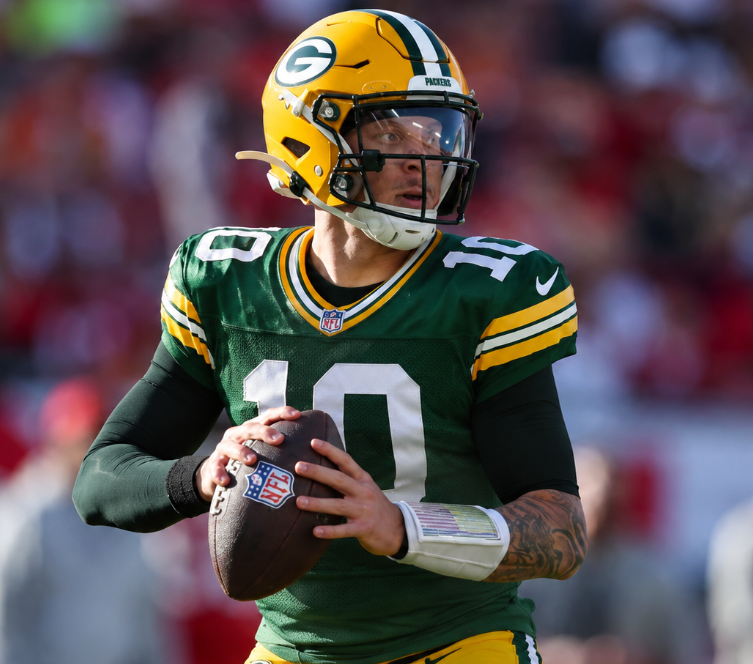
That voice belonged to Jordan Love, the current face of the franchise and its long term future.
After practice, Love addressed reporters with composure, choosing not to escalate the situation but to bring perspective back into focus.
He acknowledged the reaction, but emphasized that legacy and context must always be part of the conversation.
“I understand why people reacted the way they did, but you can’t forget what Aaron Rodgers means to this organization. One moment doesn’t define a career that shaped everything we’re building today.”
His words quickly resonated across the Packers community, shifting the tone from criticism toward reflection and respect.
For many fans, the message served as a reminder that greatness cannot be reduced to a single comment taken out of context.
Former players began voicing support, reinforcing the belief that legends deserve understanding when their words are misinterpreted.
Inside the locker room, Love’s statement carried deeper meaning, reflecting the culture Green Bay continues to protect and preserve.
It was not just about defending a legend, but about reinforcing respect, continuity, and shared identity across generations.
Moments like this reveal more than controversy — they reveal leadership, character, and the willingness to stand firm under pressure.
Love’s response showed maturity and awareness, proving leadership is not only about performance, but about protecting what matters most.
In Green Bay, legacy is not just remembered — it is carried forward by those who understand its true value.