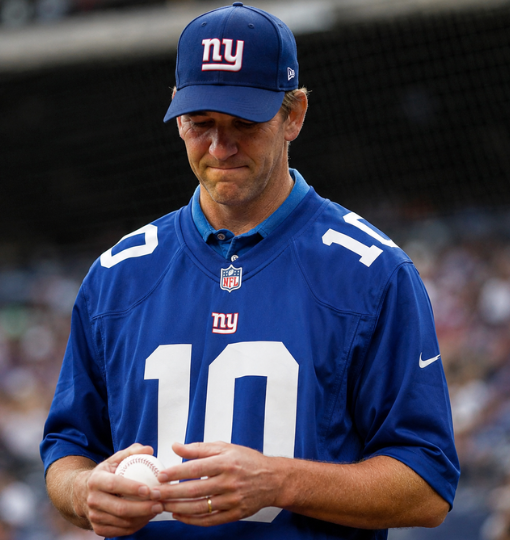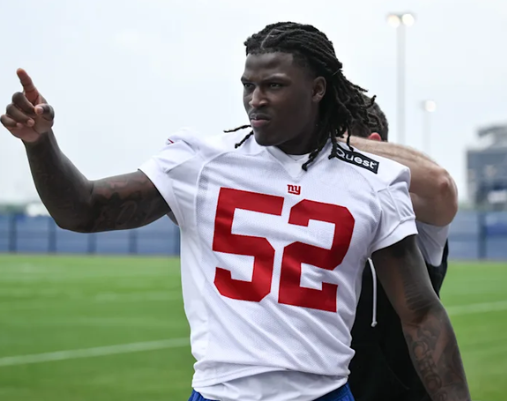
The atmosphere inside the New York Giants facility turned noticeably tense just hours after the trade sending Kayvon Thibodeaux to the Denver Broncos was confirmed.
What was intended to be a routine press conference explaining the team’s direction quickly evolved into one of the most controversial moments of the offseason.
Reporters pressed aggressively for answers, repeatedly questioning the decision to move a cornerstone defensive player at such a critical time.
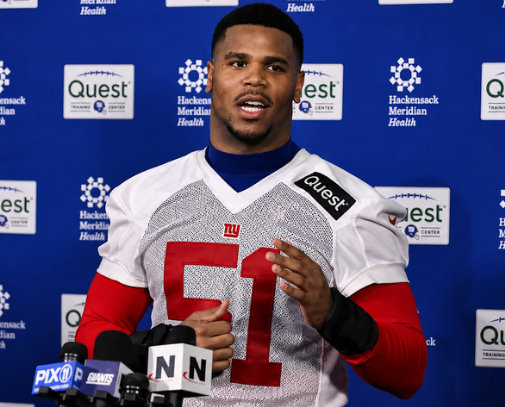
As the tension escalated, Abdul Carter stepped to the podium with a sharp expression and an unmistakably defiant tone.
Rather than deflecting, he chose to confront the growing doubt surrounding both the team and his own role directly.
“You can talk about what we lost, but I see opportunity. If anyone thinks this team got weaker, they’re going to pay for thinking that.”
The room fell silent for a brief moment before murmurs began spreading among reporters and staff in attendance.
Several journalists immediately followed up, questioning whether he was attempting to step into Thibodeaux’s role within the defense.
Carter responded without hesitation, making it clear he did not believe the team’s identity depended on any single individual.
That moment became the spark that ignited a wave of reactions across social media within minutes.
The phrase “He’s doing everything to turn Giants fanbase against him” quickly began trending across NFL platforms.
Many fans felt the tone of his remarks crossed a line, especially given the sensitivity of the situation.
They argued that a player still proving himself should focus on performance rather than delivering bold public statements.
Others, however, interpreted his comments as a sign of leadership, confidence, and competitive intensity.
Analysts noted that the issue was not only what he said, but when and how he chose to say it.
The press conference, meant to stabilize the narrative, instead amplified the emotional divide within the fanbase.
A former Giants player suggested that statements like this can create additional pressure inside the locker room.
Meanwhile, the coaching staff declined to publicly support or challenge Carter’s remarks.
That silence only added to the uncertainty as the debate continued to intensify.
For the Giants, this situation extends beyond a single trade decision.
It represents a test of culture, communication, and leadership during a pivotal transition period.
For Carter, it marks an early defining moment in how he handles pressure both on and off the field.
In today’s NFL, a single statement can travel faster than any play on the field.
And in East Rutherford that day, one comment was enough to ignite a league wide conversation.
The only question that remains is whether Carter can turn those words into performance, or whether they will become the weight he must carry moving forward.