
Houston, Texas — While many retired NFL stars pursue lucrative television careers and high-profile media opportunities, one Houston Texans legend chose a remarkably different path after stepping away from football.
According to people close to the former Texans superstar, Andre Johnson declined opportunities to become a national football analyst despite receiving strong interest from major sports media outlets, including ESPN.
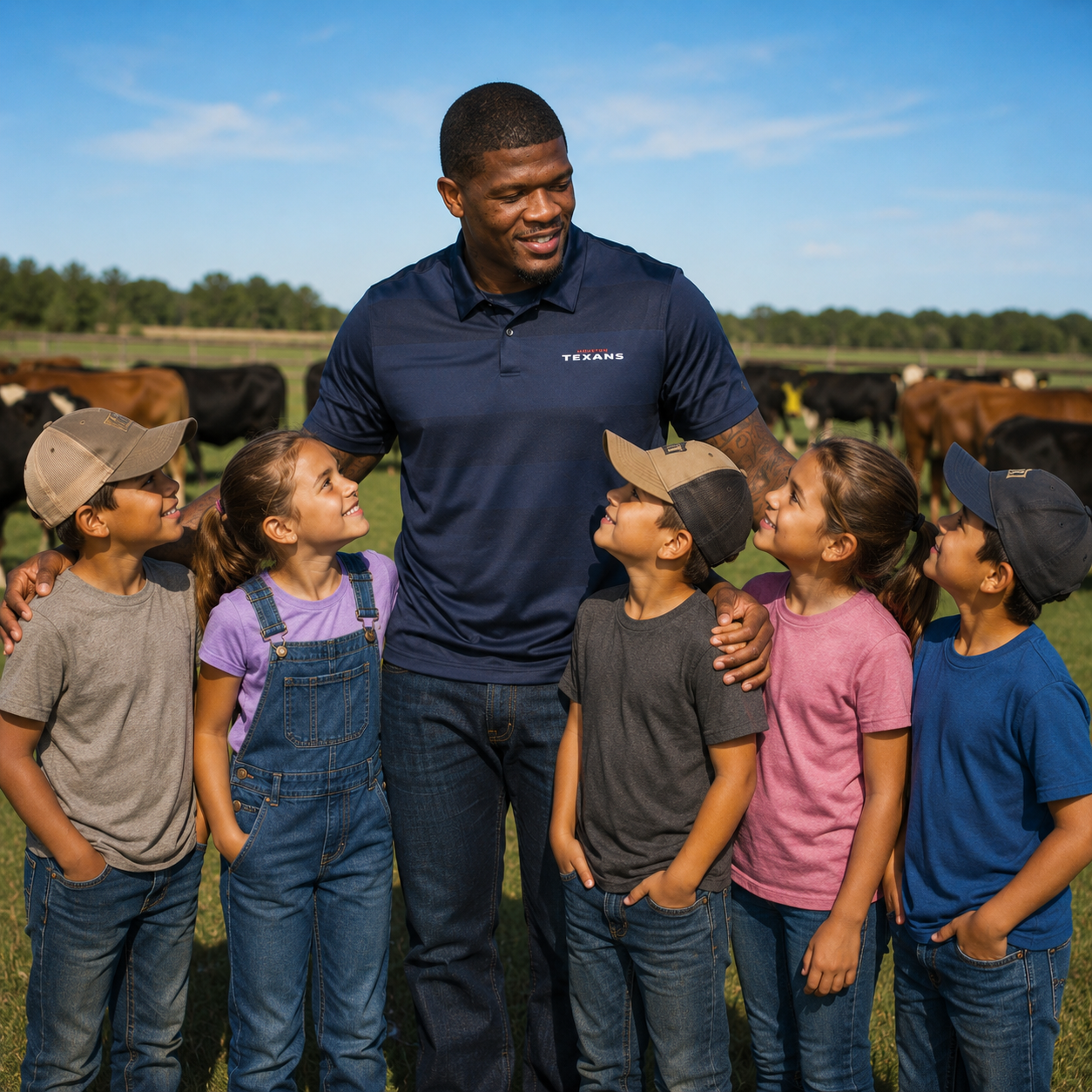
Rather than spending his retirement in television studios and national broadcasts, Johnson chose a quieter life centered on community service, agriculture, education, and helping vulnerable children and families across Texas.
For Texans Nation, Andre Johnson remains one of the most iconic figures in franchise history.
A seven-time Pro Bowler, the franchise’s all-time leader in receptions (1,012), receiving yards (13,597), and receiving touchdowns (64), and the first player ever inducted into the Houston Texans Ring of Honor, he helped define the identity of the young franchise through consistency, professionalism, and clutch performances over 12 seasons.
Known for his reliable hands, precise route-running, quiet leadership, and unwavering loyalty, Johnson became a symbol of excellence and class in Houston during some of the team’s most formative years.
Many assumed his football intelligence, respected voice around the league, and global recognition would naturally lead him into broadcasting after retirement.
However, those closest to him say his priorities were always centered on impact rather than spotlight.
He wanted his post-football life to focus on building long-term change for underserved communities in Houston and throughout Texas.
Over the years, Johnson quietly invested in a large charitable farm and ranch initiative in Texas.

What began as a small community outreach project eventually grew into one of the most impactful post-career initiatives ever associated with a former Texans player.
Today, the property includes livestock farming, crop production, and youth agricultural education programs spread across hundreds of acres.
More than half of the food produced is distributed free of charge to orphanages, homeless shelters, food banks, churches, and charitable organizations across Texas — with a special focus on supporting children and families in the Houston area.
According to organizers involved with the project, the farm now provides more than 60 tons of food every month to families facing hardship.
The remaining production supports farm operations, mentorship programs, and educational initiatives focused on sustainability, food security, and youth development.
At the center of the initiative is a residential youth program dedicated to supporting at-risk children and those from single-parent households with housing, mentorship, education, and life skills development — causes that have long been close to Johnson’s heart through his charitable foundation work.
For years, the program has helped young people build stability, confidence, and opportunity.
Beyond farming and food distribution, the site also serves as a community learning center.
Students, volunteers, and families participate in hands-on programs covering agriculture, nutrition, environmental awareness, and sustainable farming techniques.